
Where Tampa City Directories Survive
Tampa's historical shelf is split among local holdings, filmed books, and individual digital scans. The Florida History & Genealogy Library at the John F. Germany Public Library is the practical hub. Its catalog identifies Polk City Directory, Tampa/Hillsborough County as 1975 onward, while R. L. Polk & Co. published most twentieth-century Tampa editions beginning in 1905. Staff can help determine whether a wanted year is a book, microfilm reel, database item, or gap.
| Collection | Years | Where Held | Access |
|---|---|---|---|
| R. L. Polk Tampa directories | Most of the twentieth century from 1905; cataloged local run 1975 onward | HCPLC Florida History & Genealogy Library | Library shelf, microfilm, and staff help |
| Confirmed digitized directories | 1910, 1917, 1918, 1919, 1921, 1922; 1914 Blue Book | FamilySearch and Internet Archive pointers | Online access varies by host or account |
| Tampa telephone directories | 1937 through April 1962 in documented runs | Library of Congress | Digital catalog and scanned volumes |
| Criss-cross address directories | 1964 through 1966 | Library of Congress guide | Confirm volume access through catalog |
The record does not support a single last printed Polk year or a complete annual inventory. That matters. An absent volume is not proof that a Tampa resident vanished. Ask about the year on both sides, check a phone book, and search the spouse or address before drawing a conclusion.
Tampa Directory Help Downtown
The Florida History & Genealogy Library is at 900 N. Ashley Drive in Tampa, and its research line is 813-273-3652. Alongside city directories, it provides Sanborn maps, the Tampa Bay Obituary Index, maps, newspapers, FamilySearch affiliate access, and licensed resources such as Ancestry Library Edition. Some databases work only inside the library, so call before a long trip and name the year, person, and street being researched.
The HCPLC genealogy portal shows the mix of on-site and linked tools. The screen helps a researcher plan which pieces require a library visit instead of assuming that every volume is open on the web.

Use staff help for a missing annual issue, a microfilm citation, or a name obscured by print quality. Tampa City Archives is another fallback for municipal series, cemetery material, council records, and local history that can explain the person behind an entry.
Tampa Directory Images and Archives
Names in directories become much more useful when paired with a dated picture, city file, or map. HCPLC Digital Collections brings Tampa and Hillsborough photographs and archival items into a searchable online setting.
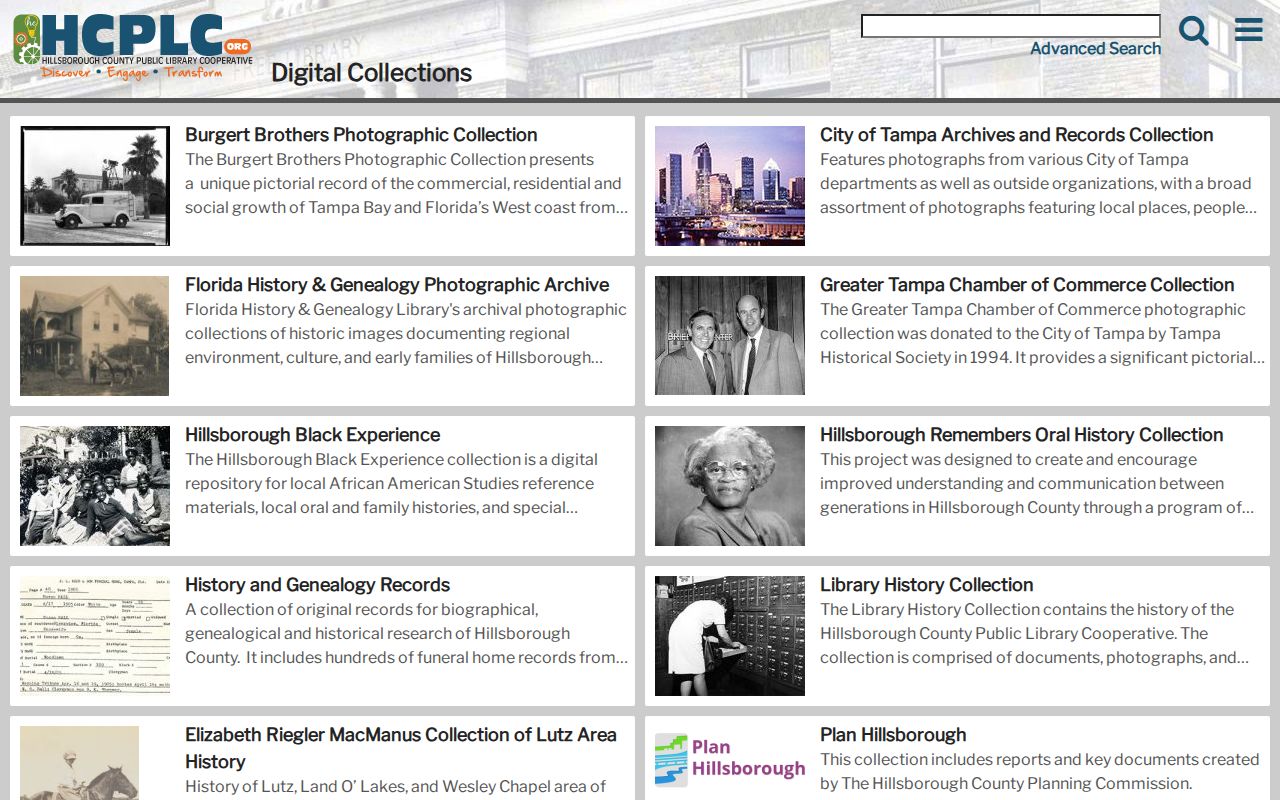
A caption may preserve a person, business, event, or street name that is abbreviated in the printed directory. Record the collection title, item identifier, caption, and date, then compare them with the directory edition rather than relying on a downloaded image alone.
The City Archives holdings add Port Tampa records from 1885 to 1961, West Tampa records from 1895 to 1925, council minutes beginning in 1857, cemetery records, Sanborn volumes, fire logs, and Urban Renewal files from 1958 to 1972. The City Archives series list is the best first check before making a focused request.
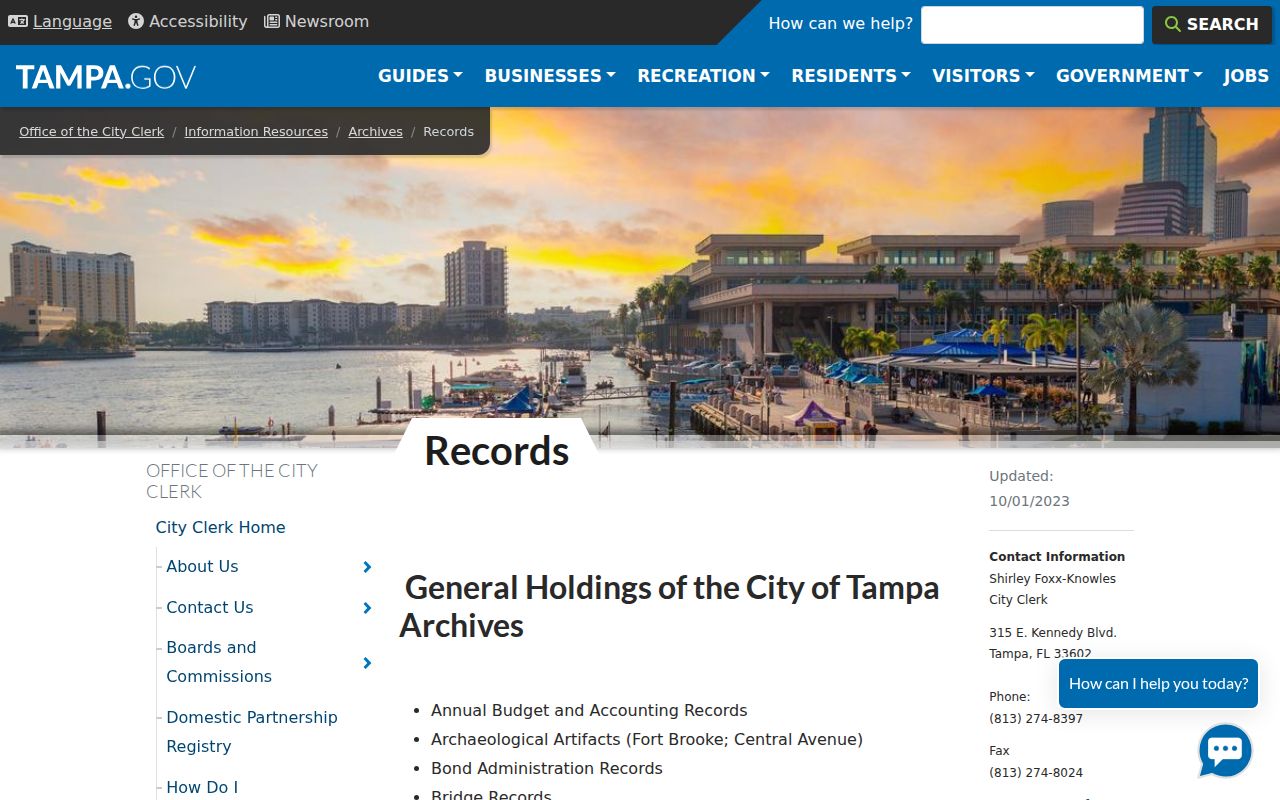
Those municipal series can establish why an address changed, why a block disappeared, or why a resident appears under West Tampa or Port Tampa rather than the expected Tampa heading.
Read a Tampa Directory Entry
A typical Tampa city directory entry compresses a household into one line. Copy it exactly before expanding abbreviations. The front matter in that same edition controls the meaning of marks such as “r,” “h,” “bds,” “rem,” and widow notation. Never import a key from a different year, because publishers and conventions changed.
| Name | Surname, given name or initials, sometimes with spouse in parentheses |
|---|---|
| Work | Occupation, trade, employer, or a business address |
| Residence | House number and street, with a unit or boarding notation when printed |
| Household clue | Spouse, widow wording, or homeowner and renter marks in some editions |
| Status mark | Edition-specific abbreviations for moved, residence, house, or boards |
- Criss-cross directory
- A later address-first arrangement that lists a street and house number before the named occupant.
- Householder index
- A list centered on the person responsible for a household, not a full roster of everyone inside.
- Abbreviation key
- The publisher's legend for shortened words and symbols. Save it with every entry because meanings can shift by edition.
Tampa names need special care. Search both parts of Spanish compound surnames, maiden and married forms, suffixes, initials, anglicized spellings, and versions without diacritics. Match the name with a spouse, trade, or street before treating two entries as one person.
What Early Tampa Directories Missed
The 1886 Tampa directory is an early broad household and business source, but it did not represent residents equally. Tampa Bay History Center research reports that Black residents were marked with an asterisk and were often listed only by a place of residence, sometimes “The Scrub,” instead of a numbered street. The 1910 directory recorded 139 Black-owned businesses, including 24 on Central Avenue.
That convention is a warning against reading silence as absence. Pair early Tampa city directories with the Florida Sentinel Bulletin, church and mutual-aid records, Sanborn maps, census schedules, and the African American History & Genealogy resources at HCPLC. Community papers can preserve a death notice, club role, business, or family link that the main alphabetical section left terse or omitted.
Burgert Photos Extend Tampa Directories
The Burgert Brothers collection holds more than 20,000 Tampa Bay images from the late nineteenth century through the early 1960s. Many are indexed by street, business, event, or sitter. That makes photography an unusually strong bridge from a bare directory line to a dated building, storefront, group, or person.
Search the same address, employer, and surname found in a Tampa directory. Then compare the photo caption and date with nearby editions and newspaper notices. A business name can be more stable than a person's spelling, especially in Ybor City and West Tampa. Photographs remain supporting evidence, not proof that every pictured person lived at the stated site.
Tampa Directory Trails in Newspapers
Three newspaper lines cover much of Tampa's directory era: the Tampa Tribune from 1895 to 2016, Florida Sentinel Bulletin from 1947 to 2008, and St. Petersburg Times or Tampa Bay Times from 1901 onward. Search a trade, spouse, club, street, and date range, not just the person's full name. Initials and common surnames often need the address to separate matches.
The library's free obituary request accepts up to three deceased names in one submission and requires a death date. Staff search the week following that date and state that results arrive by email within 14 days.
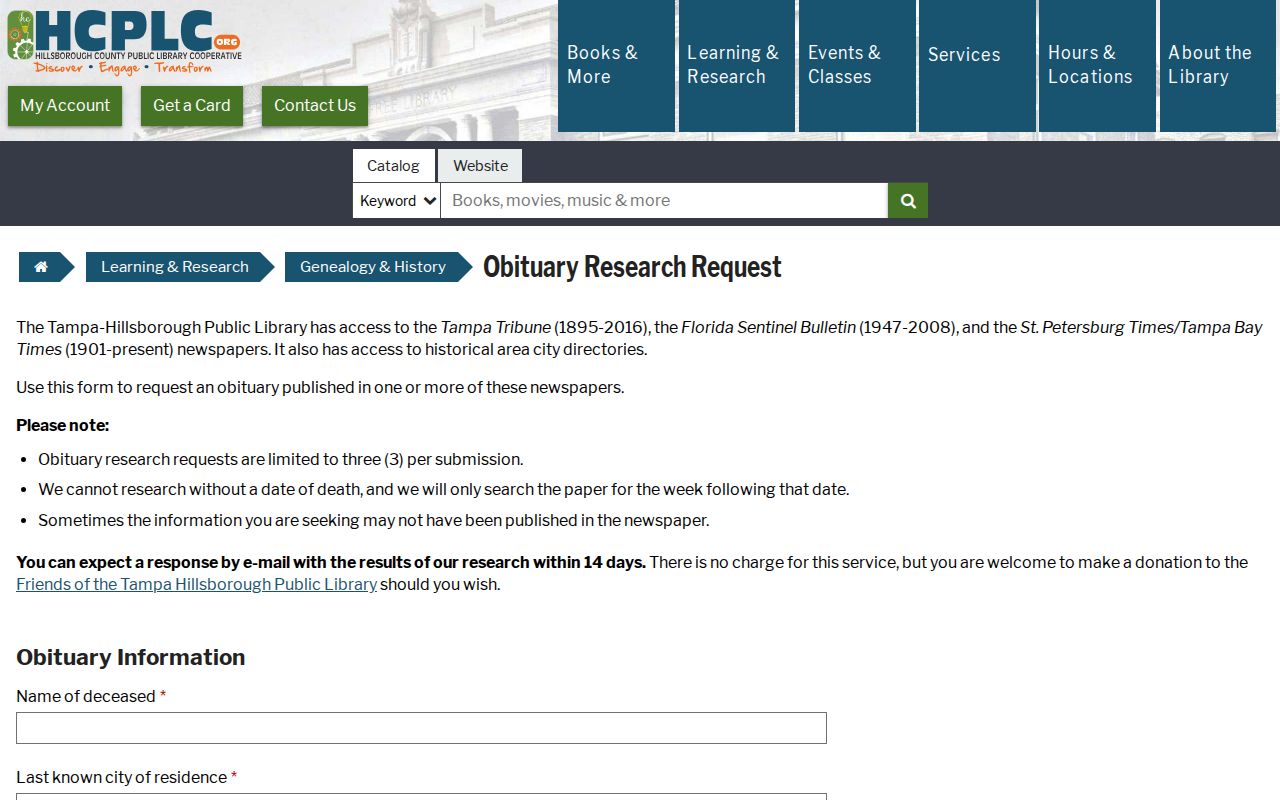
The request form is a useful end point when a name disappears from an edition. A death notice may name relatives and services, but a move, omission, or choice to remain unlisted can also explain the gap.
Note: The Tampa Bay Obituary Index covers 1855 through 1990, while the request service also searches documented newspaper runs.
Trace Families Through Tampa Directories
Build the trail one edition at a time. A city directory reflects a publisher's canvass and print date, not a live resident roll. Keep the printed year beside every observation and preserve uncertainty when only initials match.
- Record the first located name exactly, including initials, spouse, work, marks, address, and edition year.
- Check the prior and next available editions. Search the spouse and surname variants when the first name vanishes.
- Use the criss-cross section where available to confirm the house number and see other listed occupants nearby.
- Pair observations around 1940 and 1950 with released federal census schedules, then test address changes against maps and deeds.
- Close an apparent disappearance with an obituary, probate file, cemetery record, or a later directory in another place.
Street continuity is not automatic. Lafayette Street became Kennedy Boulevard, Michigan Avenue became Columbus Drive, and the documented house at historic 2410 Twelfth became 2506 N. 12th Street. Sanborn index sheets, plats, and directory street guides bridge those changes. Tampa expanded through annexation, and early Hillsborough County covered a far larger region, so place names and custodians must also be checked.
For modern address-based research, move to the Tampa street directory workflow after the historical sequence is secure. Keep the old and new address forms in the citation so another researcher can reproduce the match.